
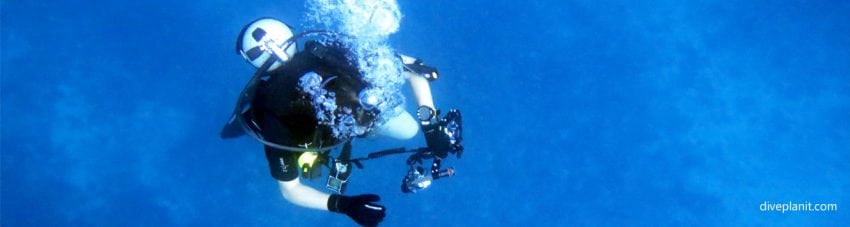
No diver wants to think about decompression illness – and that’s part of the problem. Here’s a little reminder from DAN that calling for advice sooner rather than when it’s too late can make a big difference to treatment.

Dive Munda wins Diving Company of the Year Award presented by the prestigious Luxury Travel Guide recognising excellence in service, local knowledge & cultural understanding.

The inaugural Maumere Bay Festival & Underwater Photography Competition August 2016 attracted a field of 30 international photographers competing for substantial prizes in the compact & DSLR wide angle & macro photography competition. See some of their amazing pictures here.

The diving at Uepi is spectacular – it’s a great place to experience the fantastic marine life that the Solomons has to offer; and for a very good reason: it’s a barrier island between Marovo Lagoon and the deep blue sea beyond.

With so many really special dive sites around Australia, to ask us to pick our favourite spot is a big ask. But that’s exactly what Bupa Travel Insurance asked us in their recent article, ‘Scuba Diving Adventures Around Australia’.

More often than not, the best diving is off the beaten track. In the case of diving Kadavu and Taveuni, this holds particularly true as their dive sites include the world class dive sites of the Great White Wall, Rainbow Reef and the great Astrolabe Reef.

Heard the name Raja Ampat, but not quite sure what makes it so special? In three words: location, location, location. In one: Biodiversity. But why, and how, and why again? Diveplanit explains.

Huon and the DPI are planning a fish farm right next to Broughton Island at Port Stephens – with no Environmental Impact Assessment on the local marine fauna and the tourism industry that depends on it.

One of the most common mistakes divers make is insufficient dive planning. Dive plans do not need to be complicated – in fact, often the simpler the better. DAN provides some pointers on the basics of a dive plan.

With increasing populations using increasing amounts of plastic – a material with a 2% recycling rate – we need to reduce our use of single use plastics in particular. Here are six simple actions that don’t require a lifestyle change.