
Diving Cocos Keeling Islands offers access to one of the most remote and untouched marine environments in Australia. Located in the Indian Ocean, the twin atolls are surrounded by crystal-clear lagoons, steep outer reef walls and coral gardens that remain largely unaffected by heavy tourism. Warm tropical water, healthy reef systems and uncrowded dive sites make the islands a rewarding destination for divers seeking relaxed but diverse underwater experiences.
The reefs support more than 600 species of fish along with turtles, manta rays, dolphins and reef sharks that are commonly encountered throughout the year. Visibility often exceeds 25 metres, allowing divers to fully appreciate the expansive coral formations, dramatic drop-offs and schooling fish that define the region. Large cabbage corals, soft leather corals and gorgonian fans dominate many sites, while occasional pelagic visitors add unpredictability to every dive.
The Cocos Keeling Islands cater to a wide range of divers. Calm lagoon reefs are suitable for newer divers and snorkellers, while deeper outer reef walls and current-swept channels provide more advanced diving opportunities. Because there is only one dive operator on the islands, the underwater environment remains quiet and uncrowded, even during peak travel periods.


Activities Beyond Diving
Popular activities include snorkelling, fishing, birdwatching, island-hopping tours, stand-up paddleboarding and exploring World War II relics scattered across several islands. Beaches throughout the atoll also provide excellent conditions for relaxing, swimming and photography.
Staying Connected
Mobile coverage is available in populated areas through the Telstra network, while Wi-Fi is offered at many accommodations and local businesses. Internet services rely heavily on satellite and limited fibre infrastructure, so speeds and reliability can vary depending on location.
We Think . . .
Diving Cocos Keeling Islands is best suited to divers looking for healthy reefs, small-group diving and a quieter alternative to more commercial dive destinations. The combination of uncrowded waters, strong marine biodiversity and relaxed island life creates an experience focused more on the environment and less on mass tourism.
The Cocos Keeling Islands are a remote Australian territory located in the eastern Indian Ocean, approximately 2,750 kilometres northwest of Perth. The islands form two coral atolls made up of 27 small islands surrounded by shallow lagoons and outer reef systems. Only West Island and Home Island are permanently inhabited.
The geography of the atolls creates varied diving conditions, ranging from calm lagoon reefs to steep outer reef walls exposed to ocean currents. This mix of environments supports both coral reef ecosystems and larger pelagic marine life. Protected marine park zones surrounding the islands also help preserve coral health and fish populations across the region.
The islands are part of the enormous Cocos Keeling Islands Marine Park, which covers more than 467,000 square kilometres. Reef sharks, manta rays, turtles, dolphins and seasonal whale activity contribute to the area’s reputation as one of Australia’s most isolated diving destinations.
How to Get There
The main access point to the Cocos Keeling Islands is via flights operated by Qantas from Perth. Flights generally operate twice weekly and may include a stop at Christmas
Island depending on the schedule.
Arrivals and departures operate through West Island Airport. Because flights are limited, advance booking is highly recommended, especially for divers travelling with excess luggage or dive equipment.
Staying at The Breakers
Perfectly positioned in the centre of West Island’s local village, The Breakers offers ten spacious bungalows surrounded by tropical gardens and within walking distance of the island’s main facilities. The property is located close to the shoreline, where reef sharks and turtles are often seen in the shallows, while the supermarket, Visitor Centre and local dining options are only a short stroll away.
Designed for independent island stays, each bungalow is fully air conditioned and fitted with either king or twin bedding configurations, quality linen, television and a private outdoor deck area. Kitchenette facilities include a full-size fridge and freezer, microwave, toaster, kettle, electric frypan and coffee plunger, allowing guests to prepare simple meals during their stay. Bathrooms include towels, soap, shampoo, conditioner and hairdryers.
Guests also have access to shared facilities including laundry services, BBQ areas, books, games, ice and eskies, along with communal outdoor spaces for relaxing after a day of diving or exploring the islands.


Bungalow
The standard bungalow accommodates up to two guests and can be configured with either a king bed or twin beds. Each bungalow includes a private ensuite bathroom, verandah, wardrobe space, television, microwave, cookware, stovetop, hairdryer, radio and alarm clock. Bath and beach towels are provided.


Accessible Bungalow
The accessible bungalow is purpose-built for guests with mobility requirements and includes a ramp entrance along with a fully accessible bathroom. Features include grab rails, a roll-in shower with handheld showerhead, fold-down seating and an accessible toilet.
The bungalow can be arranged with king or twin bedding and includes a private ensuite, verandah, microwave, cookware, wardrobe space, television, radio, alarm clock, hairdryer and full linen service including bath and beach towels.

Upstairs Bungalow
Located on the upper level, the upstairs bungalow overlooks the tropical gardens below and offers additional privacy. The room can be arranged with king or twin bedding and includes a private ensuite bathroom, verandah, microwave, cookware, television, wardrobe space, radio, alarm clock and hairdryer. Bath and beach towels are also provided.
Please note that this bungalow is accessed by stairs and is not suitable for guests with limited mobility.

The diving around the Cocos Keeling Islands combines lagoon reefs, drift dives, coral gardens and deep outer reef walls. Warm water temperatures averaging between 26°C and 29°C allow comfortable diving year-round, while visibility frequently reaches 20–30 metres.
Marine life includes reef sharks, manta rays, turtles, tuna, barracuda, trevally, nudibranchs and schools of tropical reef fish. The islands are also known for healthy hard corals, soft corals and large gorgonian fans rarely seen in such good condition elsewhere in the region.
The isolated location and low diver numbers help preserve reef quality, with many sites remaining largely untouched by heavy tourism.
Local Information
- Home Island – Home Island is the cultural centre of the atoll and home to the Cocos Malay community. Visitors can explore local cafés, the Pulu Cocos Museum and historical buildings while experiencing a quieter side of island life. Ferry services operate regularly between Home Island and West Island except on Sundays.
- Direction Island – Direction Island is famous for Cossies Beach and The Rip snorkelling channel. It is accessible by public ferry on selected days or through guided lagoon tours.
Dive Services
Cocos Dive is the only dive operator on the islands and is run by experienced dive guide Dieter Gerhard. The operation focuses on personalized small-group diving with flexible scheduling based on weather, tides and diver experience levels. Advance booking is strongly recommended due to limited boat capacity and the popularity of the destination among repeat visitors.
Daily diving generally includes two boat dives with long bottom times and relaxed surface intervals. Divers are collected in the morning before heading to the dive base to organize equipment and launch the boats. Surface intervals are often spent at Direction Island, where divers can snorkel The Rip or relax on the beach before the second dive.
Dieter’s approach to guiding emphasizes safety, comfort and marine life education. Divers regularly participate in post-dive discussions identifying reef species and unusual sightings observed during the dives.
A dive day diving with Dieter pretty much runs like this:
- 8am get collected and driven to the Dive Shop (Dieter’s house), sort out all the gear and load into the boat
- 9am depart from dive shop
- 9:30am launch the boat and head off to the first dive site
- 10:30am first dive, usually at least a full 60 min
- 11:15am out of the water, debrief and depart the first dive site to head to Direction Island for lunch
- 12pm lunch (see details below on the excellent lunch that Dieter provides)
- 1pm go for a drift snorkel in The Rip
- 1:30pm set off for the second dive
- 2pm on-site for second dive
- 3:30pm second dive finishes; out of the water, debrief
- 3.45pm set off back for West Island
- 4:20pm arrive back and load the boat back onto the trailer
- 4:45pm back to Dieter’s, wash down the gear
- 5pm beer o’clock.
Lunches between dives typically include fresh salads, fruit, bread, cheeses, soup and cold meats prepared for the group. Wildlife encounters such as dolphins, manta rays and turtles are common during boat transfers throughout the day.
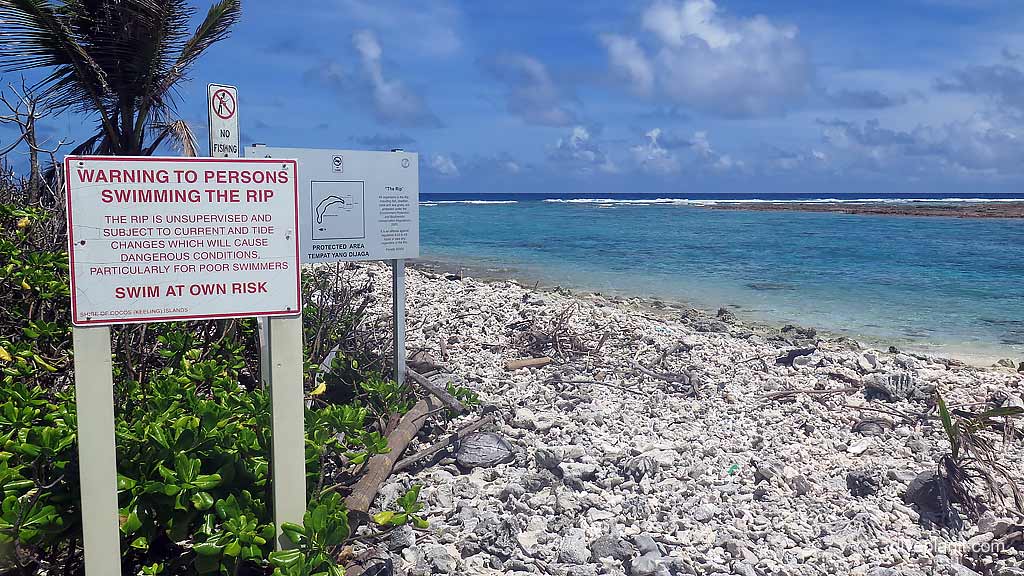
The Rip, in case you’re wondering, is a channel where pristine Indian Ocean water flows into the lagoon. As you might expect lots of critters hang there. So it makes a great drift snorkel which you’ll want to do over and over.
On the way out, or back or on the way to lunch, there’s always a bonus: whether that’s a swim with dolphins, or watching mantas from the boat, or a snorkelling around a shallow ‘composite wreck‘.
Dive Boats
Cocos Dive operates two boats:
- Sayap Kecil – A smaller vessel designed for four divers plus crew, ideal for personalised trips and flexible diving schedules.
- Putri Laut – A larger boat accommodating up to ten divers and two crew, commonly used for group diving trips.
Both vessels are equipped for lagoon and outer reef diving conditions.
Best Time to Dive
Diving is possible throughout the year in the Cocos Keeling Islands. Water temperatures remain warm year-round, usually between 26°C and 29°C.
The calmer dry season generally runs from July to October and often brings stable weather and sunny conditions. The wetter season from December to May can still provide excellent diving with warm water and active marine life.
Manta rays, reef sharks, dolphins and turtles can be seen year-round, while larger pelagic encounters depend on seasonal conditions and ocean activity. Because weather patterns influence site accessibility, dive plans are adjusted daily to take advantage of the best available conditions.


The atoll offers more than 30 regularly visited dive sites, with conditions changing depending on tides, currents and seasonal weather.
- Cabbage Patch – Known for its enormous cabbage coral formations, this site features dense schools of anthias and chromis hovering above healthy coral structures. Reef sharks and turtles are also commonly encountered here.
- Garden of Eden – A dramatic outer reef wall dive where pelagic species such as barracuda, tuna, sharks and rainbow runners patrol the drop-off. Large gorgonian fans line the reef edge while schools of bigeye trevally often surround divers mid-water.
- Sandshute to the Drop-Off – This site combines sandy reef ledges with deeper coral slopes where white tip reef sharks are frequently seen resting beneath coral overhangs.
- Rosewall Coral – Rosewall Coral features cascading hard coral formations descending toward deeper water. Schools of surgeonfish and parrotfish move across the reef while soft corals and reef fish cover the wall.
- The Cables – A combination reef and wreck dive located within the lagoon. Occasional larger pelagic visitors pass through the area while smaller reef species occupy the surrounding coral structures.
- Two Caves – This site includes a sunken vessel now surrounded by marine life, along with two small cave systems near the reef wall. Batfish, manta rays, reef sharks and the resident dugong known as “Kat” are occasionally sighted here.
- Turtle Rock – A scenic reef and drift dive known for turtle sightings, coral slopes and occasional manta ray encounters.
- The Rip – Direction Island – Although primarily a snorkelling site rather than a scuba dive, The Rip is one of the most famous marine experiences in the atoll. Ocean water flowing into the lagoon creates a natural drift environment filled with schools of fish, reef sharks and turtles moving through the channel.
Pricing for Cocos Dive, Cocos Keeling Islands
| Valid to March 2027 | AUD | |
| 7 Nights at Breakers Bungalow Double/Twin with 10 boat dives | 2455 | |
| 7 Nights at Breakers Bungalow Single with 10 boat dives | 3610 | |
| 7 Nights at Breakers Upstairs Bungalow Double/Twin with 10 boat dives | 2455 | |
| 7 Nights at Breakers Upstairs Bungalow Single with 10 boat dives | 3610 | |
| Pricing includes accommodation on a twin share/double or single basis, a total 10 dives - 2 per day, including weights, air tanks, lunch and boat. | ||
| The per person pricing above is indicative only: we show 7 night with 10 dive packages at high-end and lower-end rooms for the purposes of comparison. We can give you a price (and availability) for any combination of nights/dives you wish to undertake, which will include any discounts due to you as part of that package, and any exclusions, or items payable at the resort. Please use the [Enquire Now] tab to give us your exact requirements and we'll give you the best deal we can. | ||


