
For many dive shops, training and retail have long been the core of the business. But increasingly, the most successful operators are adding a third pillar: organised dive travel. A well-run travel program can become one of the most powerful tools for customer retention, community building, and revenue diversification. Here’s why more dive shops across Australia are making it a priority—and how it can transform your business.
1. Build Loyalty That Retail Alone Can’t Match
In today’s market, divers have more choice than ever when it comes to where they buy gear or complete courses. Price competition—especially online—is tough to beat. But travel changes the equation. When divers travel with your shop:
- You’re no longer just a retailer—you’re their trip leader, mentor and dive buddy
- Relationships deepen over shared experiences, not just transactions
- Your shop becomes their ‘home base’ for diving
A week on a liveaboard or overseas trip builds more loyalty than years of casual in-store interaction.
The result: Customers who travel with you are far more likely to stay with you—for training, gear, and future trips.

2. Create a Stronger, More Active Dive Community
Many dive shops struggle with engagement between courses. Divers get certified… and then disappear. Travel programs solve this by giving divers:
- A clear next goal (the next trip)
- A reason to keep diving and improving skills
- A social group they feel part of
Trips naturally strengthen your club culture:
- New divers integrate faster
- Experienced divers stay engaged
- Friendships form—which keeps people coming back
A connected dive community = repeat business.
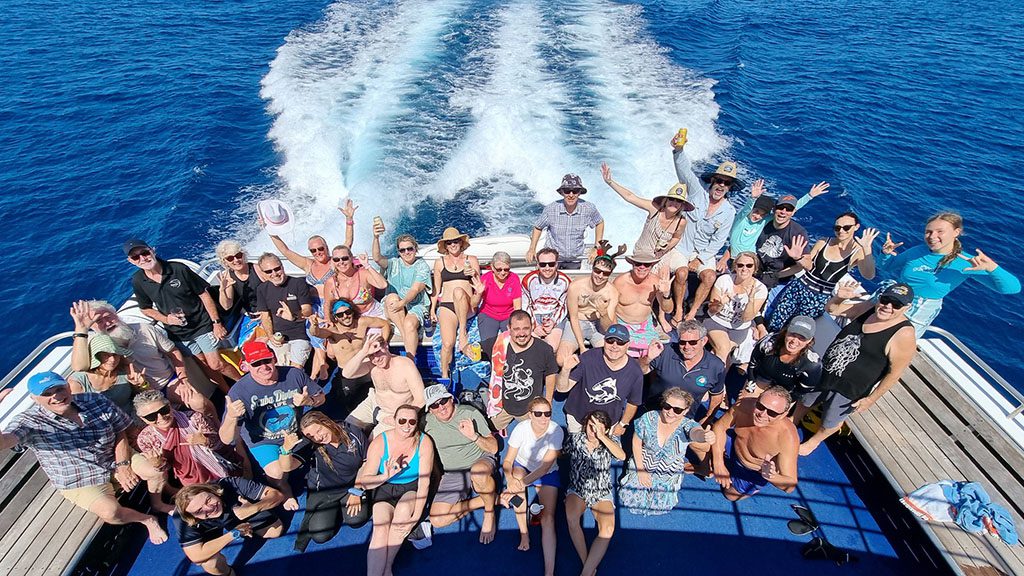
3. Drive Course Sales and Continuing Education
Travel is one of the most effective motivators for training. When divers sign up for a trip, they often need:
- Advanced Open Water
- Nitrox certification
- Deep, drift, or wreck specialties
- Refresher courses
Instead of “selling courses”, you’re helping divers prepare for a real experience—which feels far more meaningful.
Example:
A Palau trip drives drift and Nitrox courses.
A cenote trip drives cavern or buoyancy training.
The result: Higher course uptake, with more motivated students.
4. Increase Equipment Sales (without discounting)
Divers travelling overseas are far more likely to invest in their own gear. Before a trip, customers often upgrade:
- Regulators and dive computers
- Exposure protection
- SMBs, torches, and accessories
And importantly—they prefer to buy from someone they trust. If you’re leading the trip, that’s you.
The result: Higher-value sales, with less price sensitivity.

5. Unlock a New Revenue Stream
A structured travel program creates an additional income stream through:
- Group commissions from resorts and liveaboards
- Instructor/trip leader inclusions
Result: While margins vary, travel can become a meaningful contributor to overall business revenue—especially when scaled across multiple trips per year.
6. Differentiate Your Shop in a Competitive Market
Most dive shops offer the same core services: training courses, gear sales, local diving. Travel is where you stand out. A well-curated travel calendar positions your shop as:
- Experienced
- Connected
- Inspiring
Result: It gives customers a reason to choose you over competitors—and a reason to stay.

7. Future-Proof Your Business
The dive industry is evolving:
- Retail margins are tightening
- Online competition is increasing
- Customer expectations are changing
Travel helps future-proof your business by shifting focus from transactions to experiences. Dive shops that thrive long-term are those that:
- Build communities
- Offer ongoing engagement
- Create memorable experiences
Travel sits at the centre of all three.
What Makes a Successful Dive Shop Travel Program?
Not every trip needs to be complex. The most successful programs share a few key traits:
- Start simple: Begin with 1–2 trips per year to proven destinations (e.g. Indonesia, Fiji, PNG)
- Know your audience: Match destinations to your divers’ experience levels and interests
- Partner with specialists: Working with a dive travel expert simplifies logistics, payments, and risk
- Focus on the experience: You’re not just selling a trip—you’re creating a club highlight
- Build consistency: Annual trips create anticipation and repeat bookings
The Bottom Line
Adding a travel program isn’t just about running trips—it’s about building a stronger, more resilient dive business. It helps you:
- Retain customers
- Increase revenue across multiple areas
- Strengthen your dive community
- Stand out in a crowded market
And perhaps most importantly—it reminds your customers why they fell in love with diving in the first place.
Thinking About Starting a Travel Program?
If you’d like help designing a group travel calendar, selecting destinations, or managing logistics, Diveplanit works with Australian dive shops to make it simple and profitable. Let’s turn your dive club into a travelling one.


