
Nigel Marsh recently enjoyed at ten-day liveaboard trip to explore Indonesia’s hottest new dive destination – Halmahera, a location that is often compared to Raja Ampat – here he describes his experience.
I first heard of Halmahera, Indonesia, over a decade ago when a new epaulette shark was discovered in the area. This piqued my interest, however I didn’t really start to take note of this area until recently, when divers started to compare it to Raja Ampat. Keen to see if this hot spot is as good as Raja Ampat, plus find that endemic epaulette shark, I joined a liveaboard trip around Halmahera in July.

Located between the famous destinations of Lembeh and Raja Ampat, Halmahera has quietly flown under the radar of most divers for many years. It is not an easy area to visit, requiring three internal flights from Bali, and has a limited number of dive operators and resorts. Until recently most liveaboards visited the region only as a stop-off when moving each season between Komodo to Raja Ampat. However, several liveaboards now schedule extended trips around Halmahera in July and August.
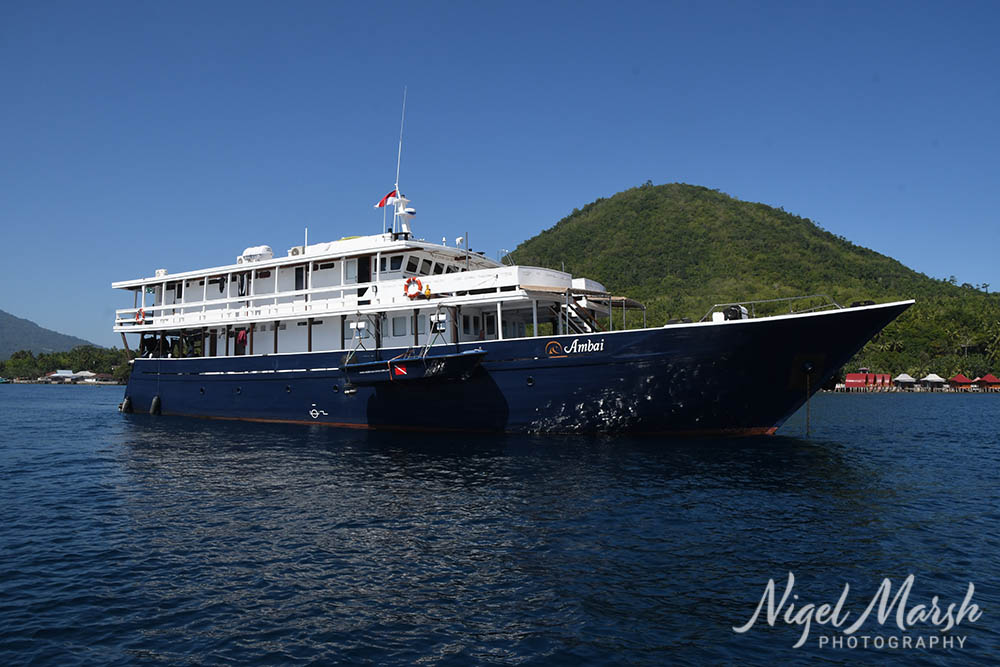
One of these boats is Ambai, a 32m long traditional ironwood vessel. Accommodating 16 guests in eight comfortable cabins with ensuites, Ambai is a well-appointed liveaboard with a large dive deck, comfortable dining room, spacious lounge areas and even a dedicated camera room.
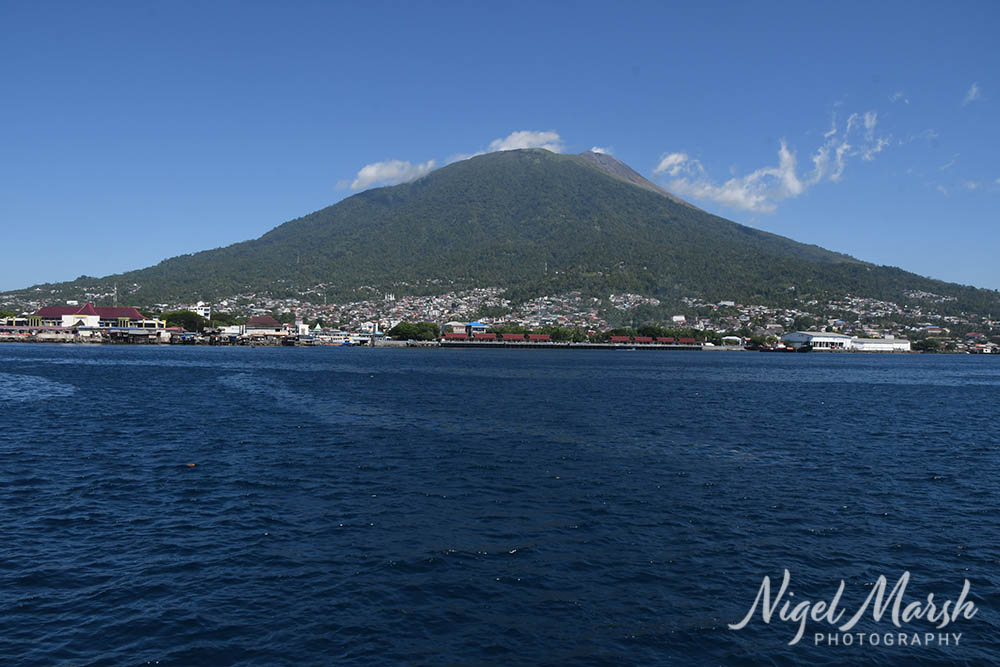
My ten-day liveaboard adventure to Halmahera started with a long day of flights from Bali, finally arriving at Ternate, the regional capital, in the afternoon. Located on an island off the coast of Halmahera, the city is a spectacular sight as it wraps around the base of a large volcano. After a night at a local hotel our group boarded Ambai mid-morning and then enjoyed the first of many wonderful meals prepared by the two chefs.

After briefings, we were split into four groups, each with its own guide. Our checkout dive at Nukila was in the harbour, and it was a delightful start to the trip. For a harbour dive the visibility was wonderful, over 15m, as we explored a sandy slope with patches of corals and an artificial reef. The main feature was a fishing boat resting on its side, but this site also had car bodies, stacks of crates and other structures. The marine life was surprising, lots of reef fish, including pipefish, angelfish, boxfish, moray eels, flasher wrasse and a bluespotted maskray.
We followed this with a night dive at Pantai Falajava, also in the harbour. Our trip director Franck informed us that this is a good spot for Halmahera epaulette sharks, which are shy and quick to hide if you shine a torch on them. I had my fingers crossed that I would see one of these endemic sharks, and descending on a sandy/rubble slope the first thing my torch picked up was an epaulette shark sitting on the bottom.

This shark was not shy or worried by my light and sat patiently as I snapped photos from every angle. I ended up finding three more of these cute small sharks, plus morays, pipefish, crabs, shrimps and basket stars.
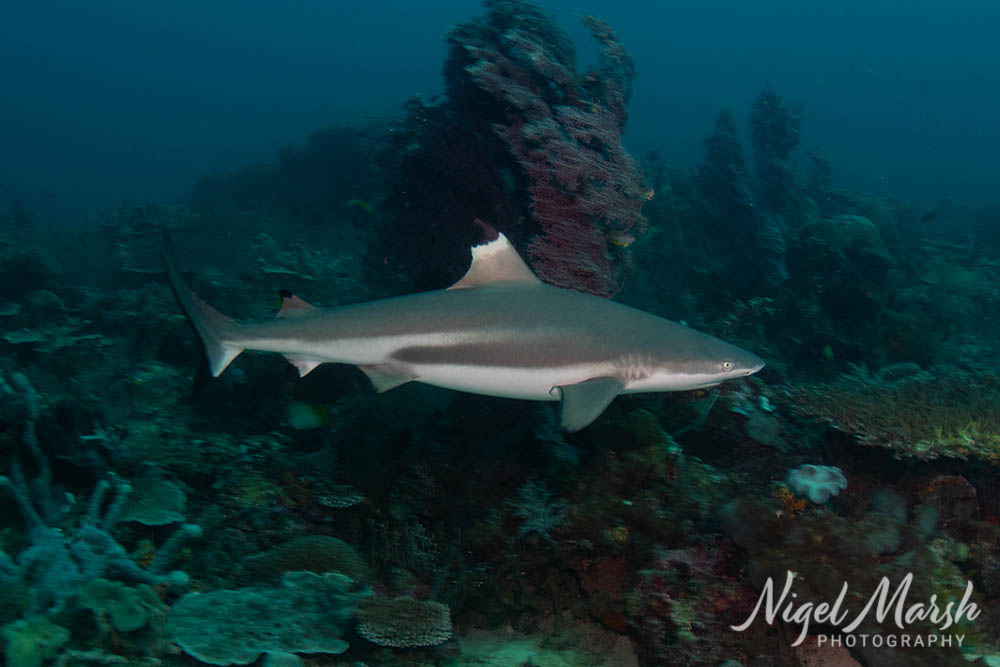
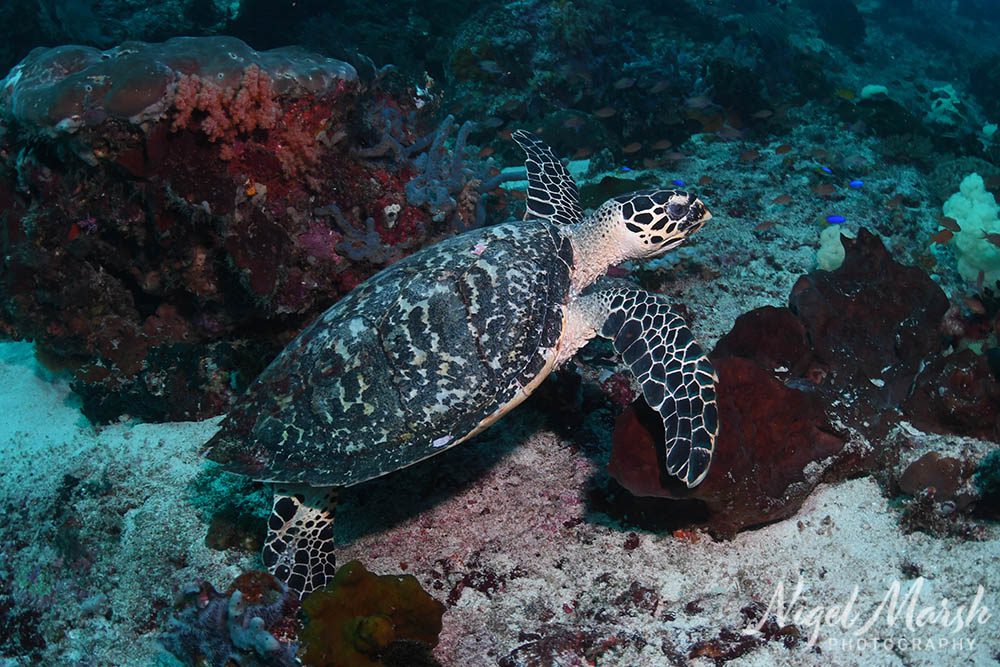
The next morning, we dived the northern end of Ternate at Am Point, exploring a pretty coral reef decorated with gorgonians, soft corals, sponges and whip corals. Home to abundant reef fish, we also spotted a hawksbill turtle. We then headed south to explore sites on the nearby islands, diving lovely coral reefs at Matiara North and Fibonga Tidora and seeing blacktip reefs sharks, garden eels, giant morays, broadclub cuttlefish, batfish and schools of fusiliers and surgeonfish. We even spotted a marlin feeding on the surface between dives.

The night dive at Makiang Ferry Jetty was stunning, exploring a black sandy bottom only 7m deep and pylons covered in sponges and corals. We found pipefish, lionfish, stonefish, razorfish, spider crabs, morays and two freckled frogfish.
Overnight we completed a seven-hour journey south, crossing the equator to explore the Besar area. This area gets very strong tides, and with the full moon Franck had to carefully pick our dive sites.

We did numerous drift dives in this area over the next four days, exploring some of the richest and healthiest coral reefs I have seen. At sites like Palau Sebatang, Jerot, Mimma’s Point, Bobane Kapal, Kusu Ridge, Pretty Shallow, Tanjung Dehabina, Tower Lagoon and Saleh Drift we cruised walls decorated with gorgonians, soft corals, sea whips, whip corals, barrel sponges and fields of hard corals in the shallows. These reefs were also overloaded with reef fish, reef sharks and pelagic fish, like mackerel, barracuda, trevally and dogtooth tuna. I can see why people compare this area to Raja Ampat.
With the strong currents the visibility varied from 10m to 20m, and upwellings meant the water temperature varied from 24C to 28C, so a little chilly at times. Unfortunately, the currents also bring rubbish to this area, with plastic bags scattered over some of the reefs.
One of my favourite dives in this area was Batu Mangga, an enormous rocky pinnacle that breaks the surface. This site has copious volumes of fish, plus nudibranchs, orangutan crabs and giant Maori Wrasse. However, I was most excited to find a rare fish – the Pewter Angelfish. Only found in this area and Raja Ampat, this was the first time I had seen one and it provided to be very camera shy.
We also did two amazing night dives in the Basar area. At Mugiu we searched the pretty coral gardens and saw epaulette sharks, pygmy seahorses and numerous crustaceans. Cimeteno was even better, a mucky rubble slope overloaded with critters. We found warty frogfish, cuttlefish, ghostpipefish, nudibranchs, sea hares, squid and a very rare eel – a nasal-flap moray.

Returning north, we spent the final three days diving reefs and pinnacles around the islands of Laigoma, Siko and Leley. This area had the best visibility of the trip, around 20m to 30m on most dives and very little rubbish. Batu Manti, Flash Rock, Renee’s Rock and Siko Pinnacle were all impressive rocky pinnacles rising from 40m to the shallows. All were covered in exquisite corals, masses of reef fish and patrolling pelagic fishes.

One of our last dives was at a site called Manta Bay. The crew hadn’t visited this site before; having heard it was a manta cleaning station. We spotted a few reef manta rays and lots of blacktip reef sharks on the coral ridge at this site. However, after the dive we discovered the area was actually a manta feeding site, getting to snorkel with a dozen giant rays feeding on the surface on a soup of plankton.
I had a great ten-day trip exploring the dive sites of Halmahera. Is it as good as Raja Ampat? Well, I never like to make comparisons, and in reality, both areas are excellent in different ways. All I will say is that I will be heading back to explore more of Halmahera.
NIGEL MARSH PHOTOGRAPHY
Each year Nigel Marsh leads special photography group trips to dive destinations across the globe. On these trips Nigel is on hand to help improve your underwater photography and does regular talks on photography and marine life. In July 2028 he will be leading a special trip back to Halmahera on Ambai and organised by Diveplanit.


