
Current diving is a specialty that requires not only a sense of adventure but also careful planning and additional procedures beyond what is required for diving in still water.
Before even getting to the dive site one of the most important considerations for drift diving is to choose your dive operator carefully. You should be comfortable with the operator and confident they can run a safe dive. Don’t be scared to ask questions, such as:
- What is the procedure for locating a missing diver?
- Is a dive float used to mark a diver’s position at all times?
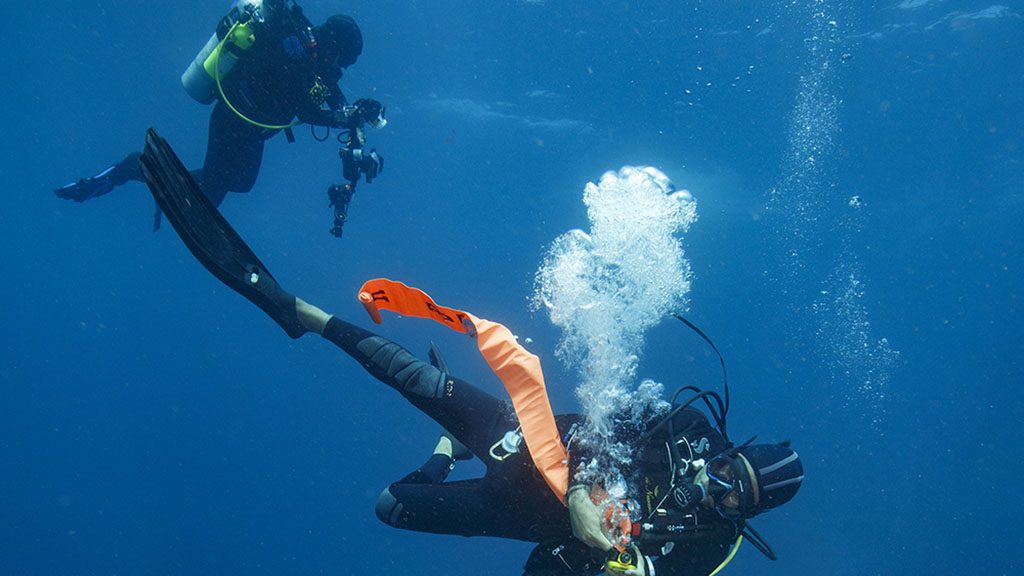
- Are personal surface markers (SMBs) provided to the divers?
- Are there likely to be downcurrents?
It is common practice in some areas to conduct drift dives without the surface float, with the boat following the diver’s bubbles. This is not a good practice for several reasons: In the event of waves, strong winds or rain the bubbles may be obscured from view and in strong currents the bubbles may surface quite a distance from the diver’s position.
When diving in current prone areas, it is always advisable to dive with a surface float. It is also necessary to have someone on the surface to watch the float and be the lookout for any divers that may surface away from the float prior to the end of the planned dive.
Equipment Checks
A broken fin or mask strap, which may normally be a minor inconvenience can provide a very challenging situation in a strong current. All your kit should be streamlined with hoses tucked away, and you should ensure that your air is on before you enter the water.
Discuss the Plan
Discuss the plan and make sure that every diver is fully aware of how the dive will be conducted and the process for ensuring the group stays together. The current should be assessed for strength and direction with everyone advised. Planning should also include a provision for the pickup of divers that get separated from the group and surface earlier than expected.
Importantly, if you don’t feel comfortable with the dive plan or the dive itself, abort.
Pay Attention
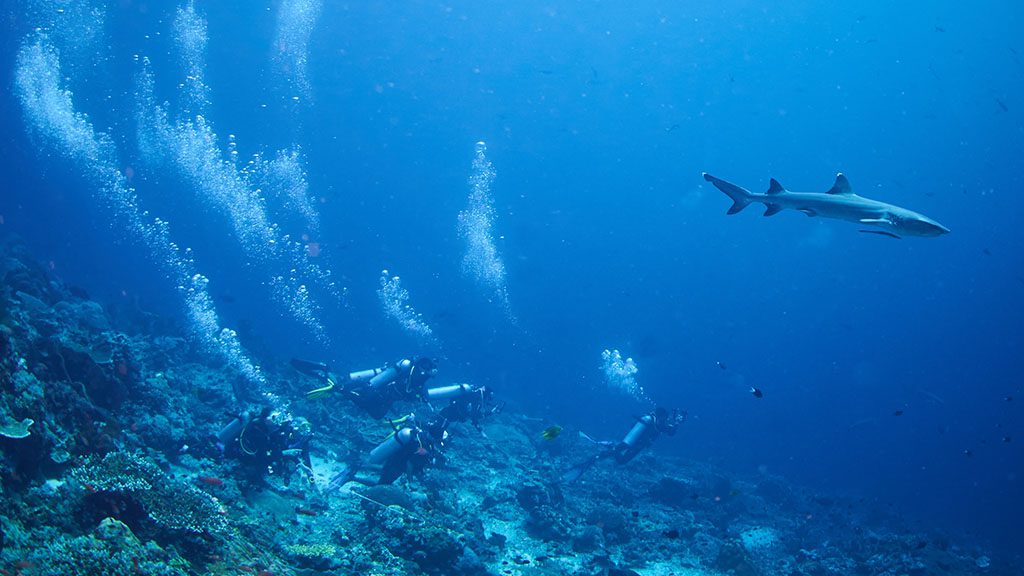
Current diving is often fast-paced, and a moment of inattention can mean losing site of your buddies, or even crashing head-first into the reef. It’s also essential that those on the surface are paying attention. Dive operators should ensure there is a dedicated lookout on the boat to watch the float and look out for any divers surfacing away from it. The boat should follow the dive and not disappear from the area for any reason.
Personal Safety
Use the float line for your descent and ensure everyone is at the bottom before moving off. Stay within sight of the group. If you lose the group or need to surface for any reason, try to do so as close to the float as possible. Deploy your own personal SMB and wait for the boat to come and collect you. It may also be necessary to use a whistle, air horn or mirror to attract attention if you have surfaced away from the float.
General Recommendations for Diving in Currents
- Listen carefully to the pre-dive briefing and instructions from the crew.
- Ensure the operator has an emergency management plan for locating and recovering missing divers or divers surfacing away from the float/group.
- Secure all dangling gear.
- Keep close to the dive guide.
- Carefully monitor your depth.
- Maintain neutral buoyancy.
- Don’t try to go against the current by grabbing the bottom, unless necessary.
- Advise the dive guide when it’s necessary for you to surface.
- Surface as near to the float as possible.
- Stay clear of the boat’s propeller as the boat may need to manoeuvre in the current.
- Avoid the down-current side of the boat and hold onto any lines thrown out by the crew while waiting for your turn to exit.
- Remain calm if you are swept away from the boat.
- Deploy surface signalling devices as needed.
- Ensure the surface support includes a dedicated lookout to watch for divers surfacing, and that they will not be leaving the area for any reason during the duration of the dive.
If the correct procedures are followed current diving can be fun and is often rewarding in terms of the marine life encountered. Don’t be afraid to ask the operator about their safety plans for current diving before you sign up for your dives.
DAN is Your Dive Safety Association. For more diving health & safety content visit World.DAN.org.