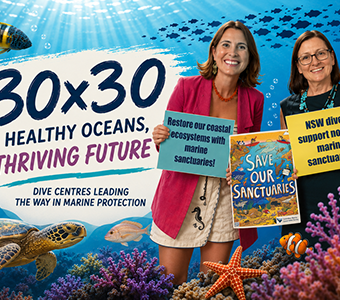
Australia has some of the most extraordinary diving on the planet. From the remote reefs of the Coral Sea to grey nurse sharks on the east coast and sea dragons in our southern waters, our marine environment is one of this country’s greatest natural assets.
But extraordinary marine experiences depend on one fundamental thing: healthy oceans.
That is why Diveplanit Travel has made a submission to the Australian Government’s current review of the management plans covering 44 Australian Marine Parks – and why we are joining others in Australia’s dive industry in calling for stronger, better-designed marine protection.
A once-in-a-decade opportunity
The Australian Government is developing new management plans for marine parks across the Coral Sea, Temperate East, South-west, North-west and North networks.
This is an important opportunity to help Australia meet its commitment to protect at least 30% of our ocean in highly protected areas by 2030.
But reaching 30% shouldn’t simply be about achieving a number. It matters what we protect, where we protect it and how effectively those areas are managed.
Diveplanit is supporting a substantial expansion of well-designed National Park Zones, guided by science and developed with meaningful involvement from Traditional Owners, marine users and regional communities.

Why this matters to divers
Divers have a unique perspective on ocean health.
We see the difference between a reef teeming with fish and one where larger animals have disappeared. We notice changes in coral cover, fish abundance and the reliability of wildlife encounters.
And as a dive travel company, we see how those differences affect people’s travel decisions.
Divers and snorkellers travel to experience abundant marine life, healthy coral and kelp communities and encounters with sharks, rays, turtles, whales and other wildlife. These experiences generate bookings, repeat visitation and recommendations.
Dive travellers also spend well beyond the dive boat, supporting accommodation, restaurants, transport, retail and other tourism businesses.
Australia’s recreational scuba diving industry has been estimated to contribute up to $4.2 billion annually to the national economy. Protecting the environments that attract these travellers is therefore not only an environmental responsibility; it is an investment in regional jobs, tourism businesses and Australia’s reputation as a world-class nature destination.

Protection in the right places
One of the central points in our submission is that marine protection needs to encompass the places where biodiversity actually occurs.
That means representative reefs, seagrass meadows, canyons, seamounts and continental shelf habitats, along with important breeding and feeding grounds, migratory corridors and wildlife aggregation sites.
Where appropriate, National Park Zones should protect whole ecosystems rather than isolated fragments.
Our submission highlights important areas across all five regions, from Osprey Reef and other Coral Sea reef systems to Cod Grounds and Pimpernel Rock on the east coast, Bremer and the Great Australian Bight in the south-west, and globally significant habitats around Ningaloo and the Rowley Shoals.
Importantly, stronger marine protection does not mean keeping people out of the ocean.
National Park Zones allow diving, snorkelling, boating, tourism, education and research while protecting the habitats and wildlife that make these activities worthwhile.
Healthy oceans are good for tourism
Some of the world’s most sought-after dive destinations have made marine conservation central to their tourism offering.
Places such as Palau, Misool and Wakatobi demonstrate that protecting marine life can help destinations compete on the quality of their experiences rather than price alone.
Australia has an extraordinary competitive advantage of its own.
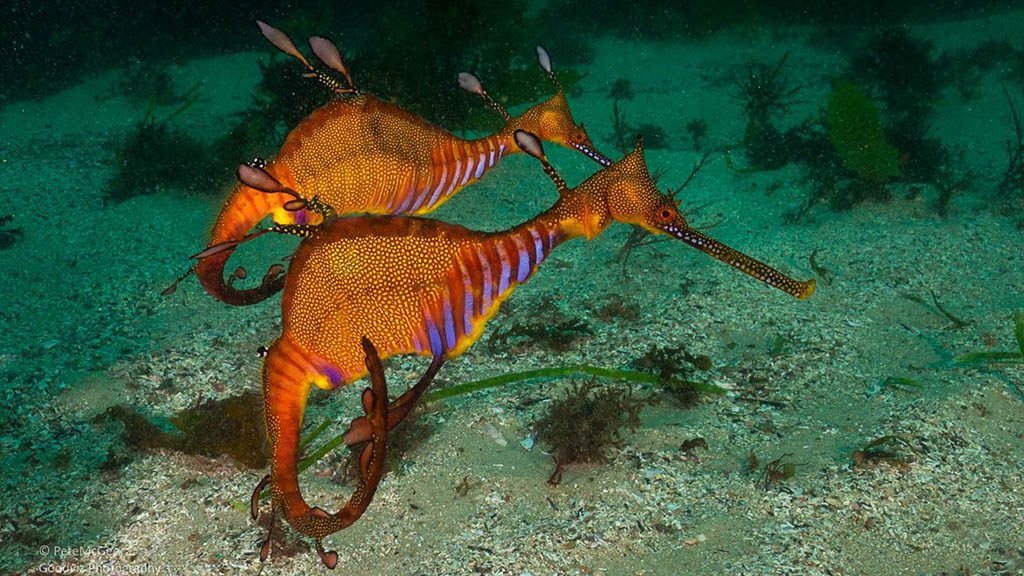
Sea dragons, wobbegongs, grey nurse sharks, giant Australian cuttlefish, eastern blue groper, whale sharks, manta rays and migrating whales are among the experiences that inspire people to travel around Australia – and across the world – to dive here.
Protecting that biodiversity protects the tourism industry built around it.
Protection needs proper management
Creating protected areas is only part of the answer.
Diveplanit’s submission also calls for long-term investment in science, monitoring, surveillance, compliance, education and adaptive management, along with meaningful Traditional Owner participation and opportunities for shared decision-making and cultural stewardship.
A marine park that exists on a map but isn’t adequately managed cannot deliver its full conservation or tourism potential.
Why we’re speaking up
For Diveplanit, supporting stronger marine protection is closely connected to what we do every day.
We send people around Australia and the world to experience remarkable underwater environments. Our business – and the businesses of dive operators, resorts, liveaboards and regional tourism communities – ultimately depends on those environments remaining healthy.
Once a destination loses its wildlife abundance, reef quality or environmental reputation, recovery can take decades. Visitors, meanwhile, can simply choose somewhere else.
That’s why we believe preventative protection makes sense environmentally and economically.
The Australian Government is currently inviting feedback as it develops the new marine park management plans.
We encourage divers, dive operators and everyone who values Australia’s oceans to learn more about the review and make their voices heard.
Read about the Australian Marine Parks review and make a submission
Our message is simple: protecting Australia’s best underwater places isn’t about stopping people from experiencing them. It’s about ensuring they remain alive, abundant and worth travelling for.